

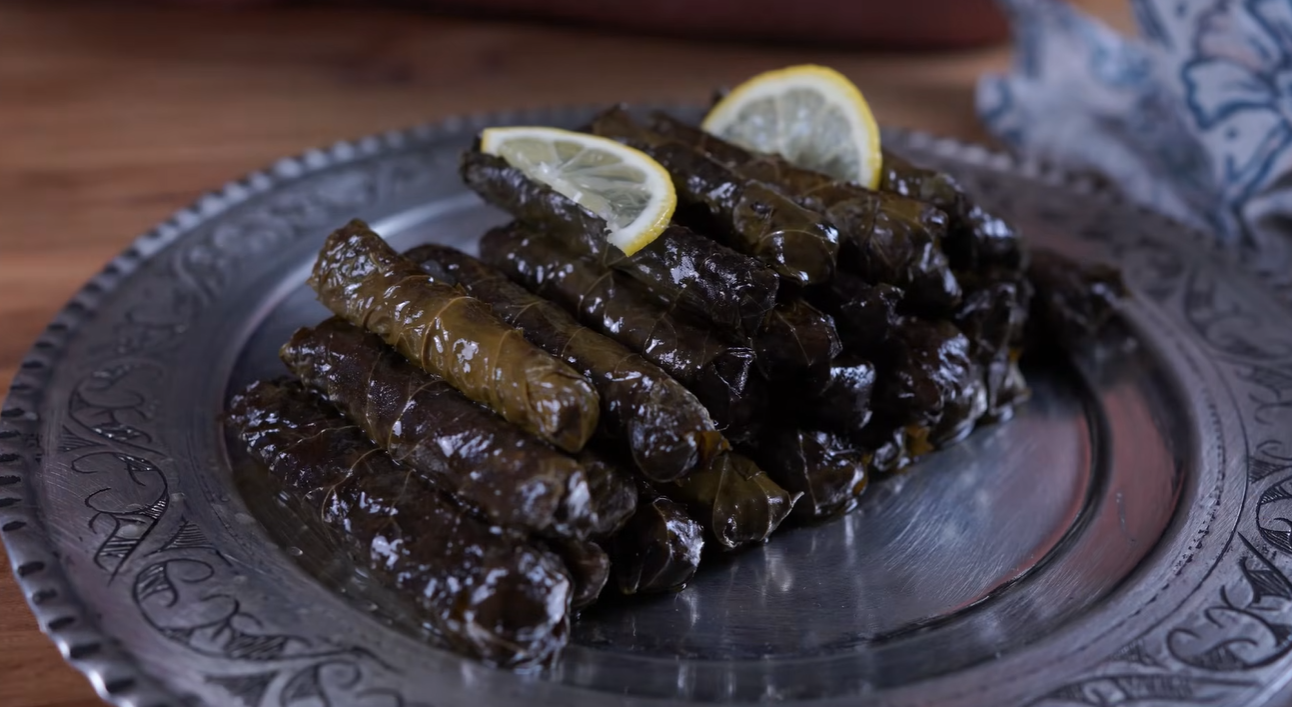
Some recipes need a long introduction. Yaprak Sarma is not one of them. Put a plate of these glossy little grape-leaf rolls on the table, and people usually reach for one before asking what else is being served.
Turkish Stuffed Vine Leaves, known as Zeytinyağlı Yaprak Sarma, are made by wrapping seasoned rice in tender grape leaves and slowly cooking the rolls with olive oil and lemon. This meat-free version has a beautiful balance of sweet, sour, herbal and savoury flavours.
It is also one of those dishes that fits several occasions. I would happily serve it for a relaxed lunch, bring it out as part of a dinner spread, or make a larger batch when family or guests are coming over. They taste excellent warm, but there is something special about eating them chilled with a squeeze of fresh lemon.
The filling is completely plant-based, yet the combination of rice, pine nuts, currants, herbs and spices makes every bite surprisingly satisfying.
What Does Yaprak Sarma Mean?
There is a useful distinction in Turkish food terminology.
Sarma generally refers to food that is rolled or wrapped, while dolma traditionally refers to vegetables or other ingredients that are stuffed. That is why grape leaves wrapped around a rice filling are commonly called Yaprak Sarma.
The word zeytinyağlı means cooked with olive oil. This particular style is especially associated with Turkish olive-oil dishes and is often served as part of a larger selection of small plates.
Why I Like This Version
The secret is not complicated. It is about building flavour in stages.
I start by softening the onions slowly in olive oil. Pine nuts go into the pan first because they develop a wonderful toasted flavour. The rice then gets a short cooking time with the onions before the currants and spices join the mixture.
The combination may sound unusual if you have never made Turkish-style stuffed grape leaves. Cinnamon, dried mint, allspice and black pepper create a warm aroma without making the filling taste overly sweet.
Lemon juice brings the balance.
Fresh dill goes in after the rice mixture has cooled slightly. I prefer this approach because the herb keeps more of its fresh character instead of becoming lost during cooking.
Ingredients
For the grape leaves
- 300 g grape vine leaves, fresh or brined
- About 70–80 leaves
- Lemon slices for cooking and serving
For the filling
- 1 cup Baldo or Arborio rice
- 2 finely chopped onions, about 400 g
- 150 ml olive oil
- 25 g pine nuts
- 25 g dried black currants
- 1 tsp ground cinnamon
- 1 tsp ground allspice
- 2 tsp dried mint
- ½ tsp black pepper
- 2 tsp sugar
- 2 tsp salt
- 200 ml water
- 2 tbsp lemon juice
- ½ cup chopped dill
- ¼ cup chopped parsley, optional
You will also need approximately 300 ml hot water during the final cooking stage.
How to Make Turkish Yaprak Sarma
1. Prepare the rice
Soak the rice in salted warm water for about an hour. Rinse it several times until the water runs clear, then drain well.
This helps remove excess surface starch and gives the filling a cleaner texture.
2. Prepare the leaves
If using brined leaves, soak them in water for about an hour to reduce excess salt. Rinse and drain.
Fresh or firm leaves should be blanched in boiling water for around two minutes. They should become flexible enough to roll without tearing.
3. Build the filling
Heat 100 ml olive oil in a large pan. Add the pine nuts and cook until lightly browned.
Add the finely chopped onions. Cook gently for about 15 minutes, stirring regularly, until they become soft and lightly golden.
Add the drained rice and stir for two to three minutes.
Next, add the currants, cinnamon, allspice, dried mint, black pepper, sugar and salt.
Pour in 200 ml hot water and the lemon juice. Cover the pan and cook until the liquid has been absorbed.
Transfer the filling to a bowl and allow it to cool. Once it has cooled, fold in the chopped dill and parsley.
4. Roll the grape leaves
Lay each leaf with the shiny side facing down and the veined side facing upward.
Remove the tough stem. Put approximately one tablespoon of filling in the centre.
Fold the sides toward the middle, then roll from the bottom upward to create a neat cylinder.
Do not roll them excessively tight. The rice needs room to expand while cooking.
5. Cook the sarma slowly
Cover the bottom of a large pot with a few unused grape leaves. Drizzle with olive oil.
Arrange the rolls closely together in layers. Add several lemon slices.
Place a heavy heatproof plate over the rolls. This keeps them from moving or opening during cooking.
Pour over the remaining 50 ml olive oil, then add approximately 300 ml hot water, or enough for the rolls to be slightly submerged.
Bring the pot to a boil. Immediately reduce the heat, cover and simmer for 40–45 minutes.
Turn off the heat and let the sarma rest for at least 15 minutes.
How I Would Serve It
At lunch time, I like Zeytinyağlı Yaprak Sarma with a simple salad, thick yogurt for those who eat dairy, and plenty of lemon.
For dinner, it works beautifully as part of a larger Turkish-inspired table with hummus, roasted vegetables, fresh bread and other small dishes.
For a special occasion, arrange the rolls on a large serving platter, add lemon wedges, scatter a little fresh dill around them and finish with a thin drizzle of extra virgin olive oil.
And don’t overlook the next-day leftovers. Chilled sarma often develops an even deeper flavour after resting in the refrigerator.
Is Turkish Yaprak Sarma Nutritious?
This vegan recipe provides carbohydrates from rice, unsaturated fat from olive oil and some plant-based protein and micronutrients from the herbs, onions, pine nuts and grape leaves.
Olive oil is a major source of fat in the recipe, so portion size matters. The grape leaves and herbs also contribute flavour without requiring a heavy sauce.
Nutritional values will vary depending on the exact amount of oil absorbed and the number of rolls served. For a precise nutrition panel, calculate the recipe using the specific brands and quantities used in your kitchen.
My Best Tips for Tender, Flavourful Sarma
Don’t overfill the leaves. A tablespoon is usually enough.
Keep the rolls snug. Arrange them close together so they support one another.
Use enough cooking liquid. The leaves need moisture to become tender.
Don’t rush the simmer. Gentle cooking gives the rice time to finish and the flavours time to blend.
Let them rest. Fifteen minutes makes serving easier and allows the filling to settle.
Taste the leaves first. Brined grape leaves can vary considerably in saltiness, so soaking time may need adjustment.
Final Thoughts
There is a reason Turkish stuffed grape leaves have remained such a familiar part of Turkish cuisine. They turn simple ingredients into something that feels carefully made.
The tender leaves, lemony olive oil, fragrant rice, sweet currants, toasted pine nuts and fresh dill create a combination that is difficult to forget.
For me, the best way to enjoy Zeytinyağlı Yaprak Sarma is without making the meal unnecessarily complicated. Put the rolls on a generous platter, add fresh lemon and let everyone take one while they are still deciding whether they want another.
Usually, they do.
Recipe Information
Recipe: Zeytinyağlı Yaprak Sarma
Cuisine: Turkish
Course: Appetizer, Lunch, Dinner, Side Dish
Diet: Vegan
Preparation: About 1 hour soaking/preparation plus rolling
Cooking: 40–45 minutes
Resting: 15 minutes
Main ingredient: Grape vine leaves
Servings: Approximately 6–8, depending on portion size
Best served: Warm, room temperature or chilled
Source
Turkish Cuisine, The World On a Plate
Share Taste with us, Learn with us: www.cookandshare.co
Cook Share Inspire.

2 Comments
Pingback: Japanese Chicken & Steak Cheeseburger: The Homemade Street-Food Burger I Keep Coming Back To - CookAndShare
Pingback: This German-Style Potato & Beef Dinner Comes Together in 30 Minutes And the Salad Makes It Even Better - CookAndShare