

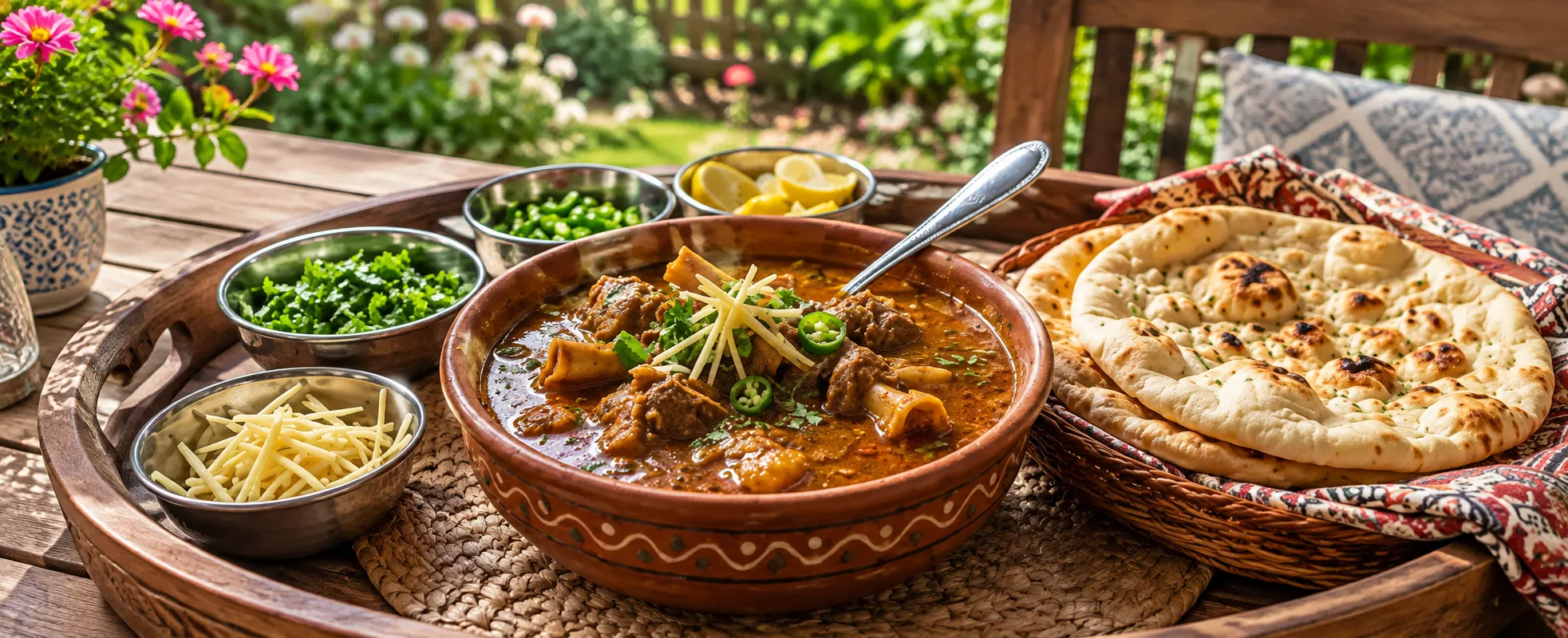
The Comfort of a Proper Lahori Paya
Few Pakistani dishes reward patience quite like Lahori Paya. The dish turns simple goat or beef trotters into a deeply flavoured curry with a rich, silky texture. It is the kind of meal that needs time rather than complicated techniques.
Paya has long been part of South Asian cooking and is commonly prepared with cleaned trotters, onions, ginger, garlic, yogurt and aromatic spices. Pakistani recipes also vary from one household and region to another, so there is no single formula for making it.
This version keeps the ingredient list practical while focusing on the qualities people expect from a good Lahori-style paya: tender trotters, a well-browned masala and a flavourful gravy that pairs beautifully with naan or khameeri roti.
Lahori Paya Recipe at a Glance
- Preparation time: 40 minutes
- Cooking time: About 2½ hours in a pressure cooker, or around 5–6 hours using traditional slow cooking
- Serves: 7 people
- Cuisine: Pakistani / Punjabi
- Course: Breakfast, lunch or dinner
- Main ingredient: Goat or beef trotters
Kitchen note: Cooking time depends on the size and type of trotters. The best test is tenderness rather than the clock. The skin should become soft and the gravy should develop a rich consistency.
Ingredients
- 1 kg goat or beef trotters, thoroughly cleaned
- 3 onions, finely sliced
- 2 tbsp ginger-garlic paste
- ½ cup yogurt, whisked
- 4 green chilies
- 1 tbsp red chili powder
- 1 tbsp turmeric powder
- 1 tbsp coriander powder
- 1 tbsp garam masala
- 1 tbsp whole garam masala
- Salt, to taste
- ½ cup cooking oil or ghee
- Water, as required
- Fresh ginger, thinly sliced, for garnish
How to Make Lahori Paya
1. Clean the trotters properly
Start by washing the trotters thoroughly. Ask your butcher to clean and prepare them before cooking if possible. Proper cleaning matters because the trotters are the foundation of the dish.
2. Build the onion base
Heat oil or ghee in a large heavy-bottomed pot. Add the sliced onions and cook over medium heat until they become evenly golden. Do not rush this stage. Properly browned onions give the gravy depth and colour.
3. Add ginger and garlic
Stir in the ginger-garlic paste. Cook for a few minutes until its raw aroma disappears and the mixture becomes fragrant.
4. Cook the yogurt masala
Lower the heat slightly and add the whisked yogurt. Stir continuously while cooking so that the yogurt blends smoothly with the onion mixture. Continue until the moisture reduces and the masala looks well cooked.
5. Add the powdered spices
Add red chili powder, turmeric, coriander powder and salt. Mix everything thoroughly. Cook until the spices are incorporated into the masala and the oil begins to separate around the edges.
6. Add the trotters and water
Place the cleaned trotters into the pot and coat them well with the masala. Pour in enough water to cover them generously.
For traditional cooking, cover the pot and simmer gently for approximately 5–6 hours, checking occasionally and adding hot water if needed. Paya is known for its long cooking process, which helps produce its characteristic thick, rich broth.
For a pressure cooker, cooking time can be considerably shorter. Check the manufacturer’s instructions and continue cooking until the trotters become properly tender.
7. Finish with aromatic spices
Once the trotters are tender and the gravy has developed a rich consistency, add garam masala and green chilies. Simmer for another few minutes so their aroma spreads through the curry.
8. Garnish and serve
Transfer the hot paya to a serving dish. Scatter finely sliced fresh ginger over the top.
Serve immediately with naan, khameeri roti or another traditional flatbread. The thick gravy is especially enjoyable when scooped up with freshly baked bread. Pakistani paya recipes commonly recommend naan as an accompaniment.
What Makes Good Paya Different?
The texture is the real test. A well-cooked paya should have soft skin and tender connective tissue, while the broth should feel naturally rich rather than simply thickened with flour.
Low, steady heat is important. A gentle simmer gives the trotters enough time to become tender without aggressively boiling the broth. This is why traditional paya often takes several hours.
For a deeper flavour, let the onion masala brown properly before adding the trotters. At the same time, avoid burning the spices, as this can make the finished gravy bitter.
Serving Ideas
Lahori Paya works particularly well as a hearty Pakistani breakfast, especially during cooler weather, but there is no reason to limit it to breakfast. It can also make a memorable weekend lunch or dinner.
Serve it with:
- Naan
- Khameeri roti
- Fresh ginger
- Green chilies
- Lemon wedges
- Fresh coriander
- A simple onion salad
Final Thoughts
Lahori Paya is a dish built around patience. The ingredient list is straightforward, but the cooking process transforms humble trotters into a deeply aromatic curry with a distinctive texture.
If you have never prepared paya at home, focus on three things: clean trotters, properly cooked masala and enough time for the trotters to become tender. Once those elements come together, the result is a satisfying Pakistani classic worth making again.
Learn with us
Keep In touch With www.cookandshare.co
Cook Share Inspire

2 Comments
Pingback: Honey Waffles Recipe: Light, Golden & Perfect for Breakfast
Pingback: Turkish Stuffed Vine Leaves: Easy Sarma Recipe