

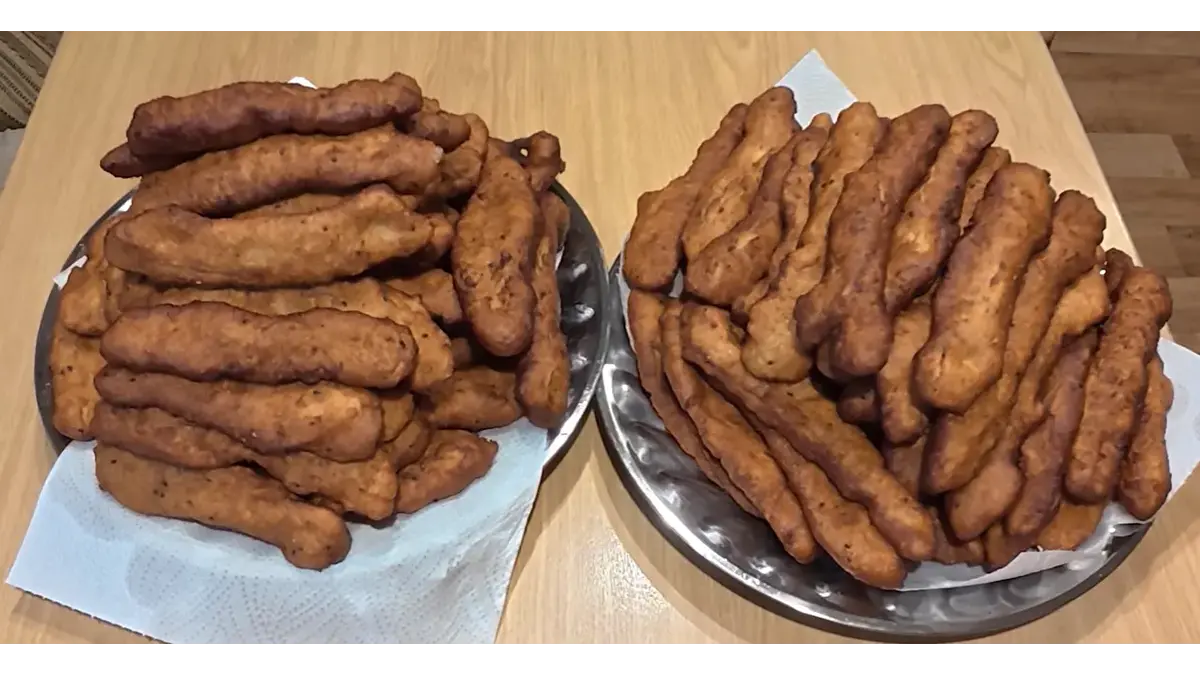
There are some traditional sweets that need very little introduction. One bite is enough to bring back memories of family kitchens, festive gatherings and tea served around a crowded table. Traditional Zalabia is one of those recipes.
This homemade sweet starts with a soft, yeasted dough enriched with milk and olive oil. Sesame and nigella seeds add texture and aroma, while cake spice mix gives the mixture a warm, distinctive character. The dough is then shaped into elongated pieces and fried until golden brown.
The result is a comforting heritage treat with a crisp exterior and tender center. Served warm, it pairs beautifully with tea or coffee and makes a generous addition to a family dessert table.
Traditional Zalabia Ingredients
Main Ingredients
- 2.5 kg all-purpose flour
- 1 kg sugar
- 1 kg milk
- Sesame seeds, as desired
- Nigella seeds, as desired
- 1 packet cake spice mix
- 2 packets yeast
- 2 packets baking powder
- ¼ teaspoon salt
- 4 tablespoons olive oil
- Water, as needed
- Vegetable oil, for frying
How to Make Traditional Zalabia
1. Prepare the Ingredients and Dry Mixture
Start by measuring all the ingredients carefully. Place the flour in a large mixing bowl. Add the sugar, baking powder, yeast, salt and cake spice mix.
Mix the dry ingredients thoroughly. This helps distribute the yeast, baking powder and spices evenly throughout the flour.
Add sesame seeds and nigella seeds according to your preference. You can also keep some aside to sprinkle over the finished Zalabia.
2. Prepare the Dough and Knead It Well
Pour the milk into the dry mixture and begin combining everything. Gradually add water while mixing until a soft dough forms.
Add the olive oil and continue kneading. Work the dough well until it becomes smooth, soft and cohesive.
Avoid adding too much water at once. Flour can absorb different amounts of liquid depending on its type and the surrounding temperature.
3. Add Olive Oil and Let the Dough Rise
Although olive oil is incorporated during kneading, make sure the dough is thoroughly coated and supple before resting it.
Cover the bowl with a clean kitchen towel or suitable cover. Place it in a warm, draft-free area and leave it until the dough rises noticeably.
The rising time can vary. In a warm kitchen, the dough may rise more quickly, while cooler conditions can require additional time.
4. Stir or Work the Dough After It Rises
Once the dough has risen, gently stir or knead it again to release some of the trapped air.
This short second working helps bring the mixture back together and makes it easier to shape.
Do not knead aggressively for a long period at this stage. A gentle reworking is enough.
5. Shape the Zalabia Into Elongated Pieces
Take manageable portions of the dough and shape them into elongated pieces.
Try to keep the pieces reasonably similar in size and thickness. Consistent shapes will cook more evenly and help prevent some pieces from becoming dark before others are properly cooked.
Keep the prepared dough portions covered while working through the remaining mixture so they do not dry out.
6. Fry the Zalabia Until Golden Brown
Heat enough vegetable oil in a deep, heavy pan or suitable fryer.
The oil should be hot before adding the dough. Carefully place the elongated Zalabia pieces into the oil, working in batches rather than overcrowding the pan.
Fry until they become golden brown on the outside and properly cooked inside. Turn them as needed so they brown evenly.
Once ready, remove the Zalabia with a slotted spoon and place them on a rack or paper-lined tray to drain excess oil.
7. Serve and Enjoy
Allow the freshly fried Zalabia to cool slightly before serving.
Serve them warm with tea, coffee or another favorite drink. Their golden exterior, aromatic spices and tender interior make them especially appealing when enjoyed fresh.
This preparation offers the comforting character of a traditional Palestinian Zalabia recipe while preserving the simple ingredients and family-style approach that make heritage sweets so memorable.
Tips for Making Better Zalabia
- Use fresh yeast and baking powder.
- Add water gradually rather than all at once.
- Knead the dough thoroughly before its first rise.
- Give the dough enough time to become light and expanded.
- Keep the shaped pieces similar in size.
- Do not overcrowd the frying pan.
- Maintain a steady frying temperature.
- Drain excess oil immediately after frying.
- Serve the Zalabia fresh for the best texture.
What Does Palestinian Zalabia Taste Like?
The flavor depends on the exact family or regional preparation, but this version has a pleasant combination of sweetness, warm spice and toasted seed flavor.
The sesame contributes a subtle nuttiness, while nigella seeds provide their characteristic earthy note. Milk and olive oil give the dough richness, creating a satisfying contrast between the fried exterior and softer interior.
Is Zalabia a Healthy Dessert?
Zalabia is best considered an occasional sweet treat rather than an everyday health food. The recipe contains a significant amount of sugar and flour, and frying increases its energy density.
Sesame and nigella seeds contribute nutrients, while milk provides protein and minerals. However, the nutritional value of an individual serving depends on the size of each piece and how much oil it absorbs during frying.
For a balanced serving, enjoy a modest portion alongside unsweetened tea or fresh fruit.
FAQ
Can I prepare the dough ahead of time?
Yes, the dough can be prepared ahead, but proper storage and controlled fermentation are important. Keep it covered and refrigerated if holding it for later preparation.
Why is my Zalabia absorbing too much oil?
Oil temperature is one possible reason. If the oil is not sufficiently hot, the dough can absorb more oil before its exterior sets.
Why should the pieces have a similar size?
Uniform pieces cook at roughly the same rate. Very thick pieces may remain undercooked inside while thinner ones become dark too quickly.
Can I reduce the recipe?
Yes. This is a large-batch recipe, so you can reduce the quantities proportionally. Maintain the same ingredient ratios when making a smaller batch.
Final Thoughts
A good heritage recipe does more than provide instructions. It preserves a way of cooking that has been shared across generations.
This traditional Zalabia recipe combines a simple yeasted dough with milk, olive oil, aromatic spices and seeds before transforming it into golden elongated sweets through frying. The process is straightforward, but the final result feels special.
Serve it fresh, share it generously and let the aroma fill the kitchen. That is often where the real charm of traditional cooking begins.
Source: Maureen Abood, Wikipedia
Learn with us
Share the Taste with us: www.cookandshare.co
Cook Share Inspire

2 Comments
Pingback: Moist Chocolate Coconut Cake Recipe | Easy Homemade Dessert
Pingback: Cream Roll Recipe: Easy Homemade Guide with Nutrition Facts