

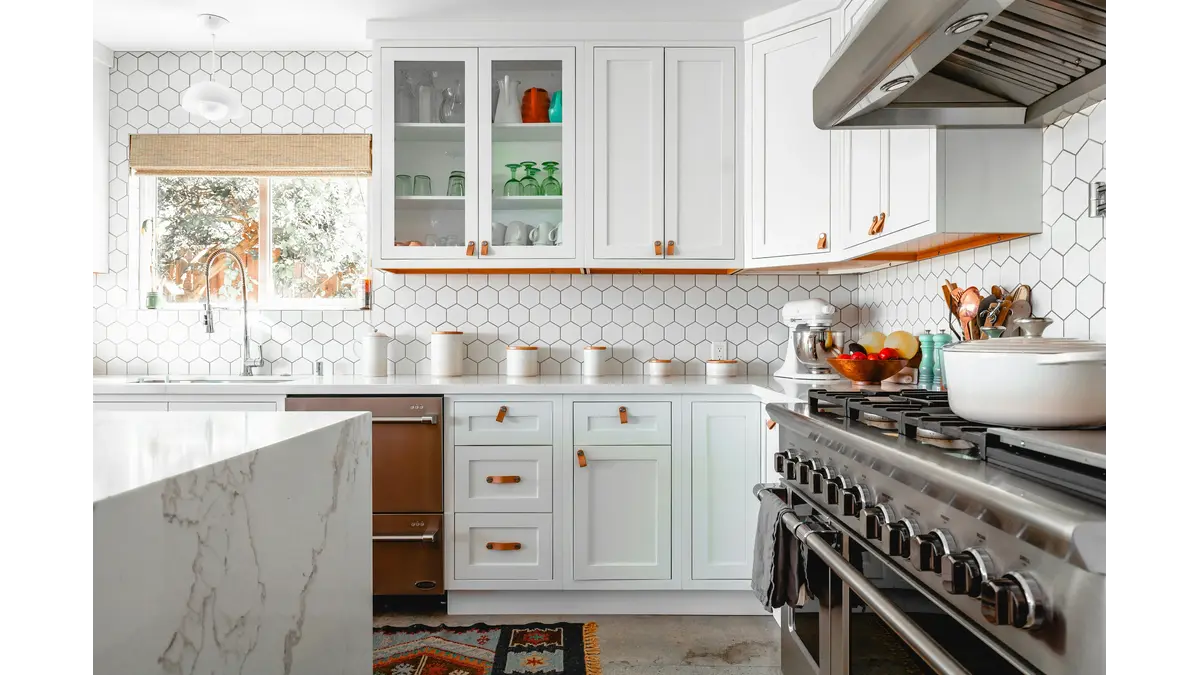
You don’t need a $500 custom kitchen to make a kitchen feel expensive. You need light, clear surfaces, and a place for everything. Most elegant kitchens aren’t expensive they’re just edited. The difference between cluttered and calm usually comes down to about a dozen small decisions that cost very little and take a weekend.
Here’s how to organize a kitchen on a budget that still looks intentional.
Start With Subtraction, Not Storage
The most expensive-looking kitchens are the emptiest ones. Before you buy a single bin, pull everything out and ask three questions: Do I use this weekly? Does it work? Would I buy it again?
There’s a real number behind this. Aspire Food Service found that most American households own far more cookware than they use in a given week the average home has roughly a dozen pieces of cookware but reaches for only three or four regularly. The rest is shelf weight.
Fill one box for donate and one for trash. Empty shelves instantly make a kitchen read as tidy, and tidiness is half of “elegant.”
Organize by Zone, Not by Category
Most people sort by type: all mugs together, all spices together. That looks organized and functions badly. Instead, organize by workflow:
- Prep zone: cutting boards, knives, oils, bowls within arm’s reach of the counter where you chop.
- Cook zone: spatulas and pots near the stove.
- Clean-up zone: dish soap, sponges, drying rack near the sink.
- Serving zone: plates, glasses, napkins near where you eat.
Walk through your usual cooking routine and map where your hands actually go. Moving items to those spots costs nothing and is the single biggest upgrade in this list.
Use Vertical Space and Visual Repetition
Elegance comes from repetition and clean lines. Match your storage. Buy one style of jar, one style of basket, one style of bin — even cheap ones and the repetition reads as “designed.”
- Use vertical risers or shelf dividers (often under $20) to double shelf capacity.
- Decant dry goods into identical glass jars. A set of six can cost $20–$ 30, and uniform jars make a pantry look curated.
- Group items in odd numbers on open shelves. Groups of three read more naturally than pairs.
Clear, matching containers beat mismatched clutter every time and glass or clear acrylic lets light through, which makes small kitchens feel bigger.
Choose Materials That Age Well
Budget elegance means skipping trendy plastic and choosing a few durable anchors. Wood, glass, canvas, and matte metal look expensive and last. Skip anything printed with a slogan or colored in a loud trend shade. Stick to a tight palette white, cream, wood, and one accent and cheap items stop looking cheap.
Small Fixes That Read as High-End
- Under-cabinet lighting: stick-on LED strips (often $20–50) make counters glow and hide grime.
- Matching towels: a set of linen-look dish towels clips onto an oven handle and looks intentional.
- A tray here and there: corral oils or coffee supplies on a simple wooden or metal tray. Trays turn a jumble into a vignette.
- Hidden storage: baskets on top of the fridge or under shelves hide the ugly, bulky stuff.
- Cabinet organizers: a cheap pull-out or a lazy Susan (under $30) makes deep cabinets usable instead of a graveyard.
Label — but Keep It Calm
Labels help even the tidiest system survive. Choose plain, printed labels over handwritten chaos, and use consistent fonts and sizes. This is where a $3 label pack earns its keep.
The Real Budget
You can transform a standard kitchen for $50–200by buying a few anchor pieces and skipping the rest. The trick isn’t spending less per item it’s being ruthless about what you actually need. Buy for your real habits, not the kitchen you wish you cooked in.
Common Mistakes to Avoid
- Buying containers before decluttering you’ll just organize things you should toss.
- Choosing too many colors or materials.
- Stuffing cabinets to the ceiling with no breathing room; leave a little air and it looks expensive.
- Hiding everything so well you forget it exists.
The point of an elegant budget kitchen isn’t perfection. It’s calm. When surfaces are clear and the right tool is where your hand lands, the room feels considered and that’s what people actually notice.
8. FAQs
Q: How much does it cost to organize a kitchen?
A: A focused refresh runs about $50–$200. Most of the cost goes to matching containers, a few risers, and one or two small organizers. Decluttering itself is free and does most of the work.
Q: What should I organize first in a small kitchen?
A: Start with the countertop. Clearing and editing surfaces instantly makes the room feel bigger and calmer, and it’s the cheapest change you can make.
Q: Do I really need matching containers?
A: No, but a single consistent style glass, uniform baskets, one color — makes mismatched contents look deliberate. You can buy a small set and expand slowly.
Q: Is organizing the kitchen worth it?
A: For most people, yes. Decluttering is a common de-stressor (see the Cleveland Clinic reference below) and a cleared, zoned kitchen genuinely speeds up cooking.
Q: What’s the cheapest way to make a kitchen look nicer?
A: Subtract first: remove clutter, match your storage, add warm under-cabinet light, and tighten your color palette. Those four moves cost very little.
Source
- The Kitchen
- Driven by Decor
- CookAndShare
Learn with us
Keep In touch With www.cookandshare.co
Cook Share Inspire
