

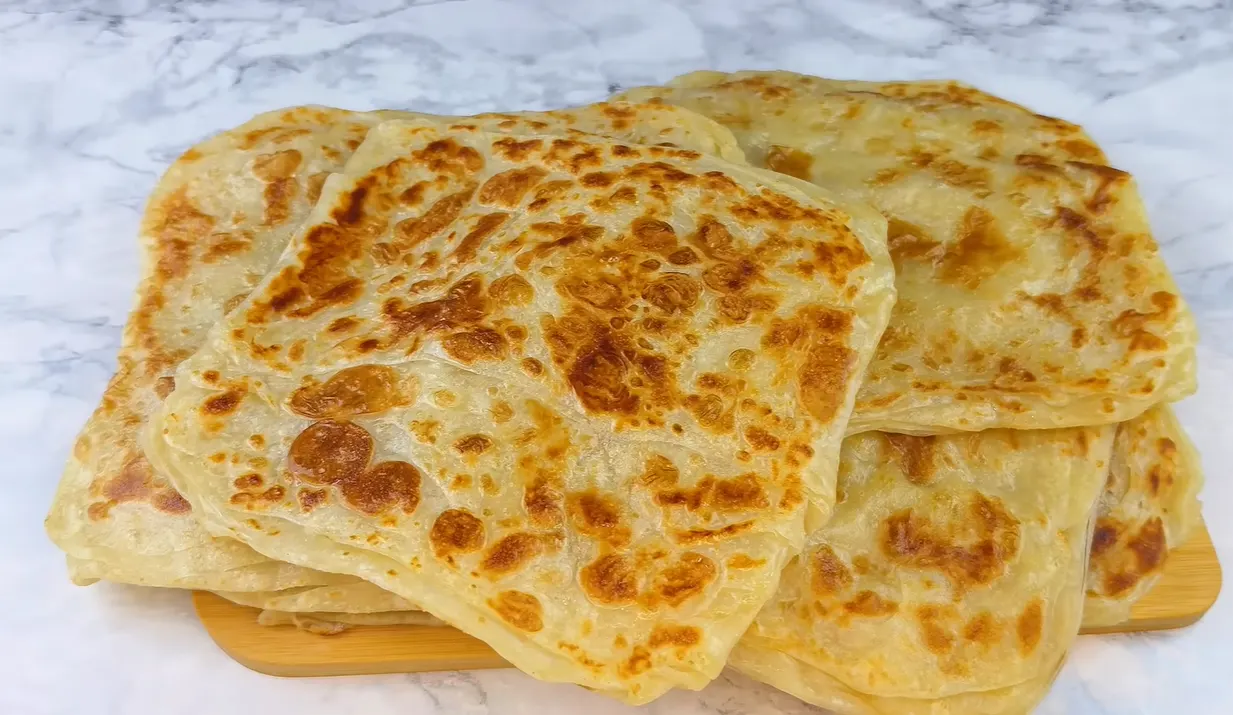
There is something deeply satisfying about tearing into a freshly cooked Turkish katmer and watching its thin layers separate one by one. The outside is lightly crisp, the inside stays tender, and the buttery aroma fills the kitchen before the first bite even reaches the plate.
The best part? You do not need a rolling pin, yeast, or hours of waiting.
This oklavasız mayasız katmer recipe uses milk instead of water and a clever folding technique to create beautifully layered dough with very little equipment. It is the kind of recipe that looks impressive on the table but remains wonderfully practical in a home kitchen.
If you have tried traditional katmer before, this method offers a different approach worth adding to your recipe collection.
What Is Turkish Katmer?
Katmer is a traditional Turkish pastry known for its delicate, layered texture. Depending on the region and recipe, it can be prepared in sweet or savory styles.
Some versions use ingredients such as clotted cream, pistachios, sugar, or spices. This particular homemade version focuses on a simple dough enriched with butter and oil. The result is a versatile pan-fried Turkish flatbread with crisp, golden layers.
What makes this recipe especially interesting is the preparation. Instead of stretching the dough paper-thin with an oklava, or Turkish rolling pin, the dough is folded to build layers.
| Nutrient | Approx. amount |
|---|---|
| Calories | ~330 kcal |
| Carbohydrates | ~43 g |
| Protein | ~8 g |
| Total Fat | ~14 g |
| Saturated Fat | ~7 g |
| Fiber | ~2 g |
| Sugars | ~2 g |
| Sodium | ~250 mg |
Ingredients
For the Dough
- 2½ cups milk
- 1 teaspoon salt
- 5½ cups all-purpose flour
For the Layers
- 120 g butter, melted
- ½ Turkish tea glass vegetable oil
The amount of flour can vary slightly depending on the flour and the moisture in your kitchen. Add it gradually rather than tipping everything in at once. The finished dough should be soft and manageable, not stiff.
How to Make Katmer Without a Rolling Pin
1. Prepare the Dough
Pour the milk into a large mixing bowl and add the salt. Gradually incorporate the flour while mixing.
Once the dough begins to come together, knead it until smooth and elastic. It should feel soft beneath your hands.
Avoid adding excessive flour. A very firm dough can make the finished katmer heavy instead of delicate.
2. Divide and Shape
Divide the dough into equal portions. Shape each piece into a smooth ball.
Cover the dough while you work. This simple step prevents the surface from drying and keeps everything easier to handle.
Unlike yeast-based dough, this recipe does not require fermentation. That means you can move almost directly from preparation to shaping.
3. Make the Butter Mixture
Melt the butter and combine it with the vegetable oil.
This mixture is the secret behind the rich aroma and separation between the layers. Butter brings depth and fragrance, while oil helps keep the texture flexible during cooking.
4. Use the Special Folding Method
This is where the recipe becomes different.
Lightly flatten a portion of dough with your hands. Brush it generously with the butter-and-oil mixture.
Fold the dough over itself, adding more of the fat mixture between the folds. Continue creating layers rather than trying to roll the dough into a thin sheet.
The more carefully you build these folds, the more noticeable the layers become after cooking.
Keep the movements gentle. You want to preserve the pockets created by the butter rather than compressing everything into one dense piece.
5. Cook in a Hot Pan
Heat a suitable frying pan or flat skillet over medium heat.
Place the prepared katmer into the pan and cook until the underside develops a beautiful golden-brown surface. Turn it carefully and cook the other side.
The aroma changes as the butter hits the heat. You will notice a warm, toasted fragrance followed by the unmistakable smell of freshly cooked dough.
Avoid extremely high heat. The outside may brown too quickly while the center remains undercooked.
How to Get Flaky Katmer at Home
The texture depends on three simple details: soft dough, enough fat between the folds, and controlled heat.
Do not rush the folding stage. Those layers are what give katmer its characteristic texture.
For the best eating experience, serve it while warm. Tear it open with your hands and look for the fine layers inside. A little butter melting between them makes every bite richer.
What to Serve With Turkish Katmer
Freshly cooked katmer works beautifully as part of a Turkish-style breakfast. Serve it with tea, white cheese, olives, tomatoes, cucumbers, honey, or homemade jam.
For a sweeter variation, a drizzle of honey can complement the buttery layers without overpowering them.
It can also make a satisfying afternoon snack when served straight from the pan.
Why This Recipe Is Worth Trying
This Turkish katmer recipe without a rolling pin removes one of the most intimidating parts of making layered dough.
There is no yeast to activate. There is no long fermentation period. You do not need specialist equipment.
Instead, the folding technique does the work.
The result is a golden, fragrant katmer with tender, flaky layers that feels far more complicated than it actually is.
Recipe at a Glance
Preparation: Short
Resting: No yeast fermentation required
Cooking: Pan-fried
Texture: Layered, tender and lightly crisp
Main ingredients: Milk, flour, salt, butter and oil
Equipment: Mixing bowl, pan and your hands
If you have been searching for an easy katmer recipe, this is a particularly approachable place to begin. The technique may look unusual at first, but once you make one, the process becomes surprisingly intuitive.
And when that first warm piece breaks apart into delicate layers, you will understand exactly why this simple folding method deserves a place in your kitchen.Source
Source: GoTürkiye – Turkish Cuisine, UNESCO – Türkiye
