

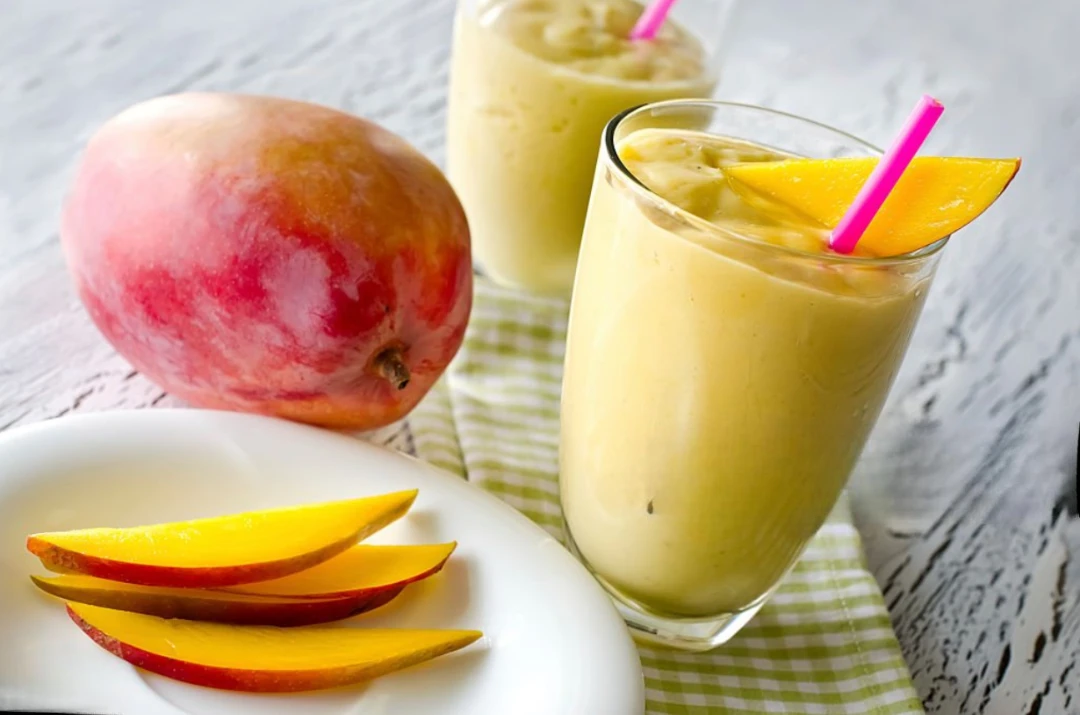
There is something satisfying about a cold mango smoothie on a warm afternoon. The fruit brings sweetness, the yogurt gives it body, and a little milk turns everything into a smooth, creamy drink.
The trick is not to overcomplicate it.
A healthy mango yogurt smoothie can be made with just a few ingredients, and fresh mango provides plenty of flavor on its own. That means there is little reason to turn a naturally sweet drink into a sugar-heavy beverage.
What goes into the glass?
Ingredients
- 1 cup fresh ripe mango
- ½ cup plain yogurt
- ½ cup low-fat milk
- ½ cup ice
- A few drops of vanilla extract
- Optional: 1 teaspoon honey
Add everything to a blender and process until smooth. Taste before adding honey. A ripe mango may already provide enough sweetness.
If the smoothie is too thick, add a small amount of milk. If it is too thin, add more mango or a little yogurt.
Why fresh mango is worth celebrating
Mango is naturally sweet and provides vitamin C along with other nutrients. It also gives smoothies an appealing texture without requiring artificial flavoring.
Fresh fruit is particularly useful in homemade drinks because you control what else goes into the blender.
That control is important.
Some commercially prepared smoothies and flavored drinks can contain significant amounts of added sugar. The American Heart Association recommends limiting added sugars as part of a heart-conscious dietary pattern.
A homemade smoothie makes it easier to decide how sweet the final drink actually needs to be.
Yogurt adds substance
Fruit alone can make a smoothie refreshing, but yogurt changes its texture and nutritional profile.
Plain yogurt contributes protein and calcium, while also creating a creamy consistency.
If you prefer a thicker drink, Greek yogurt is an easy substitute. If dairy is unsuitable for you, an appropriate unsweetened plant-based yogurt and milk alternative can be used.
Check labels when choosing alternatives because nutritional content varies significantly between products.
Estimated nutrition
One serving using the ingredients above provides approximately:
- Calories: 210–250 kcal
- Protein: 8–10 g
- Carbohydrates: 35–42 g
- Fat: 3–5 g
- Fiber: approximately 3 g
These figures are estimates and will change according to the mango’s size, yogurt type and whether honey is included.
Is a smoothie the same as eating whole fruit?
Not necessarily.
Blending fruit changes the physical form of food, but it does not automatically make the drink unhealthy. However, drinking calories can be easier to consume quickly than eating a whole piece of fruit.
That is one reason portion size matters.
Another practical consideration is that smoothies can become extremely calorie-dense when large quantities of nut butter, sweeteners, syrups and dried fruit are added.
The simpler version is often the smarter everyday choice.
How to improve the recipe
For additional fiber, blend in a tablespoon of rolled oats or chia seeds.
More protein, use plain Greek yogurt.
For a colder drink without excessive ice, freeze mango pieces in advance.
For a breakfast smoothie, serve it alongside a meal rather than assuming every smoothie needs to replace a complete breakfast.
These small adjustments allow the same basic recipe to serve different purposes.
The bottom line
A mango yogurt smoothie does not need a dozen ingredients to be impressive.
Fresh mango provides the personality. Yogurt contributes creaminess. Milk creates the right consistency. Ice makes it refreshing.
That is enough.
For readers searching for healthy homemade fruit drinks, this recipe offers an easy starting point while leaving room for customization.
The most important ingredient is not a trendy powder or expensive supplement. It is the habit of knowing what you are putting into your glass.
NUTRITION
Approximate per serving:
- Calories: 210–250 kcal
- Protein: 8–10 g
- Carbohydrates: 35–42 g
- Fat: 3–5 g
- Fiber: ~3 g
HEALTH RATING
Refreshing and nutrient-conscious
Fresh mango supplies fruit nutrients, while yogurt and milk contribute protein and calcium. Keep added sweeteners modest.
SOURCES
American Heart Association, USDA FoodData Central, Dietary Guidelines for Americans
Learn with us
Keep In touch With www.cookandshare.co
Cook Share Inspire

3 Comments
Pingback: How to Improve a Child’s Appetite Naturally: 10 Expert Tips
Pingback: Healthy Chicken Quinoa Bowl: A Balanced Protein-Rich Lunch
Pingback: Baked Salmon with Vegetables: A Healthy Omega-3 Dinner Recipe