

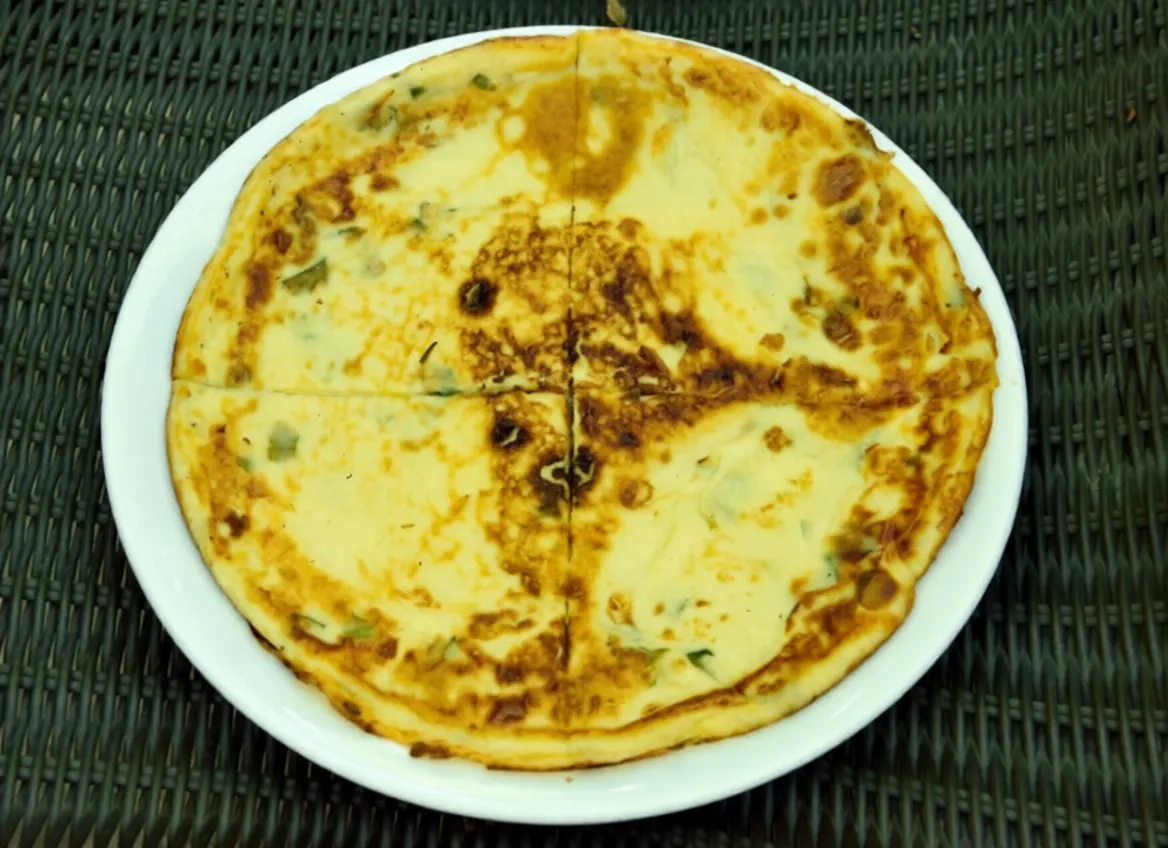
Four eggs, a few spoonfuls of flour, and a handful of herbs. That is all kaygana needs to turn an ordinary skillet into a Turkish breakfast worth waking up for.
What Is Kaygana?
Kaygana is a Turkish egg dish that sits between an omelette and a crêpe. Cooks beat eggs with a little flour and milk or water, then cook the batter in a thin layer in a buttered pan. The result is soft, tender, and easy to fold.
Where Kaygana Comes From
Many Turkish cooks link kaygana to the Black Sea coast. In Trabzon, cooks traditionally use water instead of milk, and corn flour can replace wheat flour. The history may run deeper. One food blogger traced kaygana to Marianna Yerasimos’s Ottoman cookbook, which describes bread, anchovy, and eggplant versions. So this simple dish has regional roots and a longer past than most people expect.
Kaygana Ingredients (Serves 2–3)
Prep: 5 minutes | Cook: 10 minutes | Makes: two 10-inch rounds
- 4 large eggs
- ¼ cup (30 g) all-purpose flour
- ¼ cup (60 ml) milk or water
- ½ teaspoon salt and ¼ teaspoon black pepper
- 3 spring onions, thinly sliced
- 2 tablespoons chopped parsley and 1 tablespoon chopped dill
- ⅓ cup (40 g) grated kashar, mozzarella, or crumbled feta (optional)
- 1–2 tablespoons butter
This ratio follows the simple base of eggs, flour, and liquid used in a classic version with equal parts flour and liquid.
How to Make Kaygana, Step by Step
- Whisk the eggs. Beat the eggs with salt and pepper until no streaks remain.
- Add flour and liquid. Whisk in the flour, then the milk or water. The batter should be smooth and pourable, like heavy cream.
- Add the herbs. Stir in the spring onions, parsley, dill, and cheese.
- Heat the pan. Melt half the butter in a nonstick skillet over medium-low heat.
- Cook the first side. Pour in half the batter and tilt the pan to spread it thin. Cook two to three minutes, until the edges set and the surface turns matte.
- Flip and finish. Cook one more minute, slide it onto a plate, and repeat with the remaining batter.
Common Mistakes to Avoid
Cooking too hot. Medium-low heat and patience give the best results. High heat browns the outside before the center sets.
Adding too much flour. A heavy batter cooks into a bready pancake. The flour should only hold the eggs together.
Skipping the doneness check. The USDA says egg dishes should reach an internal temperature of 160°F, measured with a food thermometer. A thin kaygana cooks quickly, but cut into the center. If any liquid egg shows, return it to the pan.
How to Serve Kaygana
Serve it hot, folded or rolled, with sliced tomatoes, cucumbers, olives, and a spoonful of yogurt. Crusty bread or simit works well for scooping, and strong Turkish tea completes the table. Kaygana also fits alongside other Turkish egg dishes, such as menemen (Turkish scrambled eggs) and çılbır (poached eggs).
Easy Kaygana Variations
- Gluten-free: Chickpea flour is a suggested substitute for a gluten-free version.
- Corn flour: This gives a more traditional Black Sea character.
- Extra fillings: Add sautéed spinach, scallions, or sliced leftover bread for a heartier plate.
Storage and Safety
Refrigerate leftovers promptly. Washington’s health department advises that egg dishes should not sit out longer than two hours and should be eaten within three to four days. Reheat until steaming hot.
Final Thoughts
Kaygana proves that a good breakfast does not need a long ingredient list. It needs fresh eggs, a light hand with the flour, and patient heat. Make one batch, and it may become the fastest weeknight meal in the rotation.
8. FAQs
What is kaygana?
Kaygana is a Turkish egg dish made from eggs, a little flour, and milk or water, cooked thin in a buttered pan. It sits between an omelette and a crêpe.
Is kaygana the same as menemen?
No. Menemen is a scrambled egg dish cooked with tomatoes and peppers. Kaygana is a flour-bound batter cooked as a thin, flat round.
Can I make kaygana without flour?
Yes, but without flour it becomes a standard omelette. The flour gives kaygana its tender, slightly crêpe-like body.
Can kaygana be gluten-free?
Yes. Chickpea flour is one recommended swap. Corn flour is also traditional in the Black Sea region.
Source
- Cooking Gorgeous
- Özlem’s Turkish Table
- USDA
Learn with us
Share the Taste with us: www.cookandshare.co
Cook Share Inspire

1 Comment
Pingback: Juicy Beef Meatballs With Creamy Mashed Potatoes