

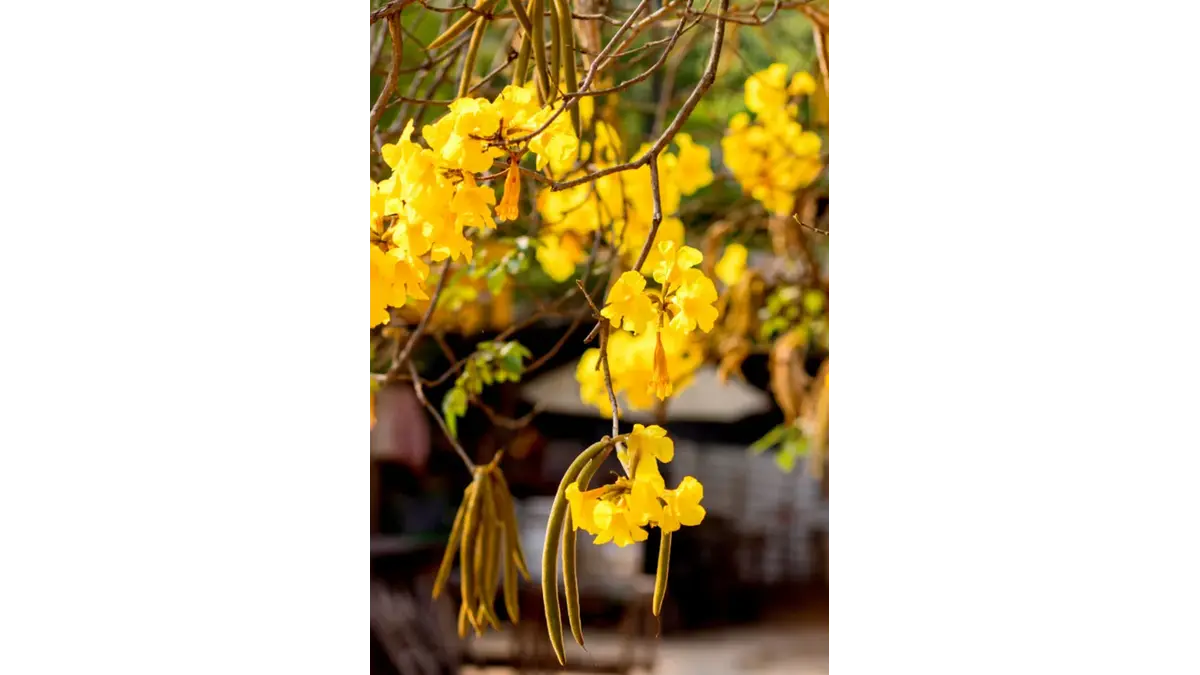
There is something distinctive about the Amaltas tree. When its bright yellow flowers appear, the tree can look almost completely covered in gold. Yet its most discussed medicinal part is not the flower. It is the long, dark pod that develops later in the season.
Known botanically as Cassia fistula, Amaltas is also called Indian laburnum or the golden shower tree. The mature pods contain a dark pulp that has been used in traditional South Asian medicine for generations, particularly as a gentle-acting laxative.
But traditional knowledge deserves careful handling. A remedy may have a long history without every claimed benefit being confirmed by modern clinical research. That distinction matters when discussing Amaltas benefits and Cassia fistula medicinal uses.
What Is Amaltas?
Amaltas is a large flowering tree belonging to the legume family. Its leaves resemble those of several other tropical trees, while its hanging yellow flowers make it easy to recognize when it is in bloom.
After flowering, elongated cylindrical pods develop. Young pods are green. As they mature, they become dark brown to nearly black. Inside is a sticky, dark pulp surrounding the seeds.
This pulp is commonly known as Amaltas pulp or Amaltas fruit pulp and is the part traditionally used for digestive preparations.
The tree is documented by the Royal Botanic Gardens, Kew, as Cassia fistula L., providing a reliable botanical reference for identifying the plant.
Amaltas for Constipation: The Traditional Use
One of the best-known traditional uses of Amaltas involves constipation.
Traditional systems have used the pulp from mature pods as a laxative. Historical preparations sometimes combine the pulp with ingredients such as rose water, sweeteners or almond oil.
The purpose is to encourage bowel movement and relieve constipation.
However, a laxative effect does not mean that Amaltas is suitable for everyone. Excessive use may cause loose stools, abdominal discomfort or dehydration. People with persistent constipation should also look for the underlying cause instead of repeatedly relying on herbal laxatives.
Amaltas and Traditional Uses for Swelling
Historical herbal literature also describes Amaltas preparations for inflammatory conditions and swelling.
Some traditional preparations used the pulp internally, while other applications involved placing a prepared paste on the affected area.
These practices are part of traditional herbal medicine rather than established treatments for internal inflammation. Modern research has investigated different biological properties of Cassia fistula, but laboratory or traditional evidence should not be treated as proof that an Amaltas preparation can cure an inflammatory disease.
Amaltas for Cough and Throat Discomfort
Traditional accounts also associate Amaltas flowers and pulp with cough relief.
One historical practice involves preparing a decoction or milk-based preparation from the pulp and using it for throat discomfort. Another traditional remedy describes burning the pods, mixing the resulting ash with a small amount of salt and taking it with honey.
These preparations should not be presented as proven cough treatments.
A cough can result from a simple viral infection, allergies, asthma, reflux or a more serious respiratory condition. Difficulty swallowing, breathing problems, persistent fever, coughing blood or a cough that does not improve warrants medical evaluation.
What Does Modern Evidence Say?
Research on Cassia fistula has examined its phytochemicals and possible biological activities, including antioxidant and antimicrobial effects. However, much of the evidence comes from laboratory studies, animal research or traditional medicine literature.
That means more human clinical research is needed before specific therapeutic claims can be made confidently.
For readers interested in herbal medicine, this is an important point: traditional use, scientific investigation and clinically proven treatment are not the same thing.
Amaltas Safety: What to Know Before Using It
Because Amaltas pulp can act as a laxative, taking too much may lead to diarrhea, cramps and fluid or electrolyte loss.
Pregnant or breastfeeding people, children, older adults and anyone taking regular medication should seek professional medical advice before using concentrated herbal preparations.
Do not use Amaltas as a substitute for medical treatment for liver disease, intestinal inflammation, severe throat swelling or chronic respiratory symptoms.
The safest approach is to identify the plant correctly, avoid excessive quantities and discuss medicinal use with a qualified healthcare professional.
The Takeaway
Amaltas has an impressive history in South Asian traditional medicine. Its mature pods and dark pulp are particularly associated with digestive support and laxative use, while traditional sources also describe applications for cough, throat discomfort and swelling.
Modern science is investigating Cassia fistula, but many traditional claims still require stronger human evidence.
So, rather than viewing Amaltas as a cure-all, it is better understood as a plant with a long medicinal history and an interesting subject for ongoing research.
Editorial note: This article is for educational purposes and does not replace diagnosis or treatment from a qualified healthcare professional.
Source
- Deep ayurveda
- Wikipedia
Learn with us
Keep In touch With www.cookandshare.co
Cook Share Inspire
