

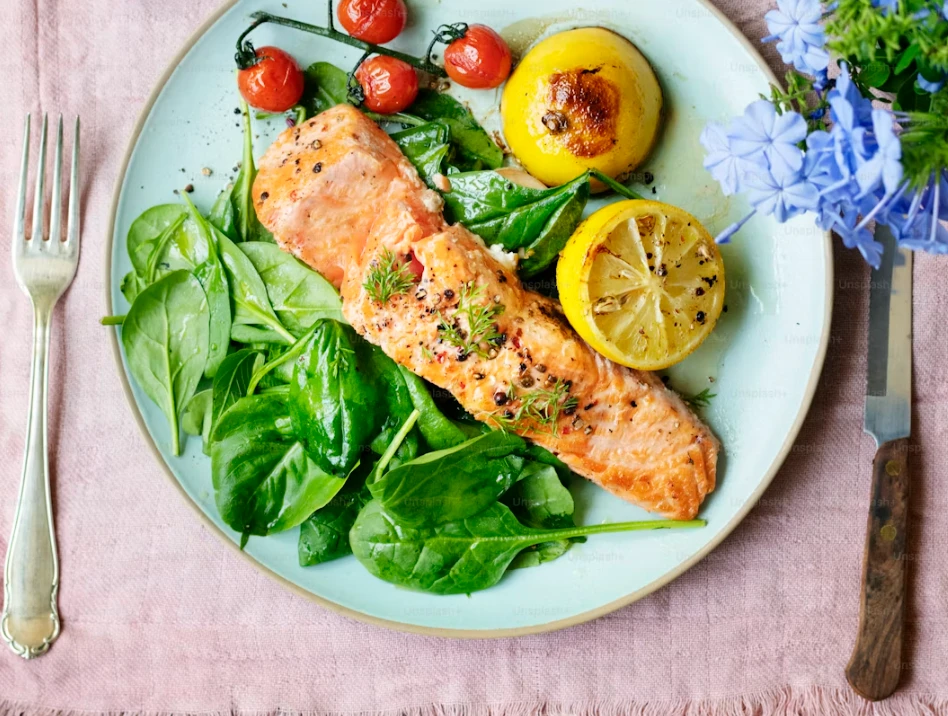
There is a particular appeal to a dinner that looks impressive but requires surprisingly little work. Baked salmon belongs in that category.
A good fillet needs only a few supporting ingredients: lemon, herbs, a little seasoning and a tray of vegetables. Once everything is in the oven, most of the work is finished.
More importantly, salmon offers a valuable source of protein and omega-3 fatty acids. Pairing it with vegetables creates a dinner that is both flavorful and nutritionally substantial.
What makes salmon different?
Salmon is known for its omega-3 fatty acid content, particularly EPA and DHA. These are long-chain polyunsaturated fats that have been extensively studied for their role in human nutrition.
The American Heart Association recommends eating fish, particularly fatty fish, as part of a heart-healthy dietary pattern.
That does not mean salmon needs to appear on the menu every evening. Variety remains important. But incorporating fish into meals can be a useful part of an overall healthy diet.
Ingredients for a simple dinner
- 150 g salmon fillet
- 1 cup broccoli
- ½ cup carrots
- ½ cup zucchini
- 1 teaspoon olive oil
- Fresh lemon juice
- Garlic
- Black pepper
- Dried or fresh herbs
How to prepare it
Heat the oven according to your salmon preparation method and line a baking tray if desired.
Place the salmon on the tray and season with garlic, black pepper, herbs and lemon juice. Toss the vegetables with a small amount of olive oil and arrange them around the fish.
Bake until the salmon reaches a safe internal temperature and flakes easily. The FDA recommends cooking fish to an internal temperature of 145°F (63°C).
Cooking time varies according to thickness, so temperature is a better safety guide than relying on the clock alone.
Why the vegetables matter
The salmon may be the centerpiece, but the vegetables prevent the meal from becoming overly protein-focused.
Broccoli contributes fiber and vitamin C. Carrots provide beta-carotene, while zucchini adds water, texture and additional micronutrients.
Roasting also changes the character of vegetables. The edges become lightly caramelized and their natural flavors intensify, making it easier to build a satisfying dinner without relying on rich sauces.
Nutrition at a glance
A portion containing 150 g salmon and the listed vegetables provides approximately:
- Calories: 400–450 kcal
- Protein: around 35 g
- Carbohydrates: approximately 15–20 g
- Fat: around 22–25 g
- Fiber: approximately 5–7 g
Actual values depend on the salmon variety, vegetable quantities and amount of oil.
If the meal needs more carbohydrates, add a serving of brown rice, potatoes or another whole-grain option.
Is salmon suitable for everyone?
Fish can be part of a healthy diet, but dietary requirements vary. People with fish allergies obviously need alternatives, while pregnant individuals and parents choosing fish for children should pay attention to current advice regarding fish types and mercury exposure.
The FDA and EPA publish guidance on choosing fish that are lower in mercury.
For most home cooks, the practical lesson is simple: variety matters, and choosing recommended fish species can help make seafood a regular part of a balanced diet.
A better approach to “healthy dinner”
Healthy eating is sometimes presented as a list of forbidden foods. That approach can make everyday cooking unnecessarily complicated.
A more useful strategy is to ask what can be added to a meal.
Add vegetables. Include an appropriate protein source. Choose a sensible carbohydrate when needed. Use fats thoughtfully. Keep heavily processed additions occasional rather than central.
The salmon dinner follows that philosophy naturally.
Final thoughts
Baked salmon with vegetables is the kind of meal that rewards simplicity. There is no need to bury good fish under a complicated sauce. Lemon, garlic, herbs and a little olive oil are enough to create a flavorful plate.
For readers looking for easy healthy dinner recipes, it also has another advantage: preparation is straightforward and cleanup can be minimal when everything is cooked on one tray.
It is practical food, but it never feels like a compromise.
NUTRITION
Estimated per serving:
- Calories: 400–450 kcal
- Protein: ~35 g
- Carbohydrates: 15–20 g
- Fat: 22–25 g
- Fiber: 5–7 g
HEALTH RATING
Nutrient-dense dinner
Rich in protein and omega-3 fats, with vegetables supplying fiber and micronutrients.
SOURCES
American Heart Association Fish and Omega-3 Fatty Acids, hungryfoodie, Food digest
Share the Taste with us
Learn with us
Keep In touch With www.cookandshare.co
Cook Share Inspire

3 Comments
Pingback: Lahori Paya Recipe | Authentic Pakistani Slow-Cooked Paya
Pingback: Karonda Fruit Benefits: The Tangy Fruit You Should Know About
Pingback: Turkish Stuffed Vine Leaves: Easy Sarma Recipe